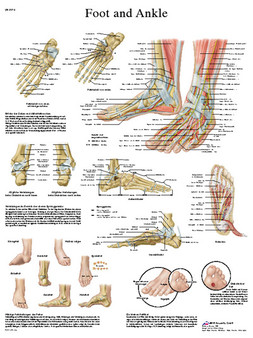


Foot Massage & Reflex Zone Chart (Laminated)
The Foot Massage & Reflex Zone Chart is a professionally printed and laminated poster that maps reflexology zones on the feet. Produced by 3B Scientific, it measures 50 × 67 cm (20 × 26 in) and is printed on premium glossy paper with UV‑resistant, two‑sided lamination for long‑term durability. Every zone on the foot is clearly labelled, making it an invaluable reference for students learning anatomy, massage therapists practicing reflexology and healthcare providers educating patients.
The chart shows how specific areas of the feet correspond to different organs or regions of the body. Reflexology divides the body into ten vertical zones — five on the right side and five on the left. Each of these zones runs down the length of a foot from the toe to the heel and is believed to influence the health of the corresponding organs when massaged. While reflexology is considered an alternative practice and scientific evidence supporting its medical effectiveness is limited, it is widely used to promote relaxation and reduce stress.
The chart’s laminated finish allows it to be written on with non‑permanent markers and wiped clean. Metal eyelets make hanging easy, and the 125‑micron lamination prevents curling and yellowing. Because the chart is both colorful and anatomically precise, it serves as a professional display in medical offices and classrooms and is often used by college students studying massage, reflexology or human anatomy.
Key Features
- Brightly colored, anatomically accurate representation – labels every part of the foot’s reflex zones and links each area to corresponding parts of the body.
- High‑quality lamination – printed on glossy UV‑resistant paper; laminated on both sides (75 µm) with metal eyelets for easy hanging. The lamination prevents curling and yellowing and allows notes to be written with non‑permanent markers.
- Large poster size – 50 × 67 cm (20 × 26 in) for clear viewing in classrooms or clinics.
- Dual finish options – available in laminated or paper formats; the laminated version is recommended for frequent handling or display.
- Ideal teaching tool and reference – described as a “great teaching tool or reference point”. It is suitable for doctors’ offices, clinics, massage studios and college classrooms.
Why Students and Medical Offices Choose This Chart
College students studying anatomy, massage therapy or holistic health appreciate the chart’s accurate depiction of reflex zones and clear labelling. The poster’s large size makes it easy to view during lectures or practical demonstrations. Because the lamination is robust and can be written on and erased, the chart serves as a reusable classroom resource.
Medical and therapy offices use the chart as a communication tool. The colourful graphics help practitioners show patients where pressure will be applied during a reflexology session and how each area of the foot corresponds to different organs or body systems. The chart is suitable for a doctor’s office or as a reference point, allowing clinicians to explain reflexology techniques and potential benefits while also reminding patients that reflexology should complement, not replace, conventional medical care.
Understanding Reflexology
Reflexology is an alternative therapy in which practitioners apply manual pressure to specific points on the feet, hands or ears. When the foot alone is involved, the practice is called foot reflexology. According to practitioners, reflexology is based on five reflex zones on each foot that correspond to different organs in the body. Reflexologists divide the body into ten equal vertical zones (five on each side).
While practitioners believe that stimulating these zones can influence the corresponding organs by unblocking energy pathways (Qi), scientific reviews have not found convincing evidence that reflexology can treat medical conditions. However, many people use reflexology for relaxation, stress reduction and complementary therapy. This chart can help guide those sessions by ensuring correct placement of pressure points.
Foot Anatomy at a Glance
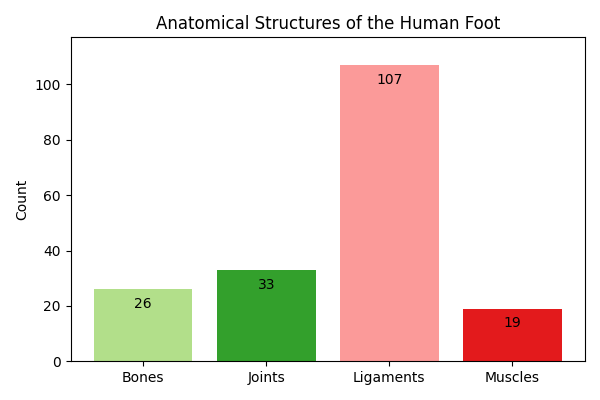
Understanding the structure of the foot helps explain why reflexology focuses so heavily on this part of the body. The human foot is an intricate structure composed of 26 bones, 33 joints, 107 ligaments and 19 muscles. These components work together to support body weight, absorb shock and facilitate movement. The following chart summarizes the counts of these anatomical structures:
The bones of the foot are grouped into tarsal bones, metatarsal bones and phalanges. The tarsal bones include the talus (ankle bone), the calcaneus (heel bone) and the navicular, cuboid and cuneiform bones. These bones form the arches that help absorb impact when walking or running. The forefoot contains five metatarsals and the phalanges (toe bones); each toe has three phalanges except for the big toe, which has two. Ligaments and muscles—such as the plantar fascia, tibialis muscles, peroneal muscles and flexor/extensor muscles—stabilize the bones and control movements.
Historical Context
Reflexology’s modern form originated in the early 20th century. In 1913, ear, nose and throat specialist William H. Fitzgerald and physician Edwin F. Bowers introduced zone therapy to the United States; they claimed that applying pressure to specific areas could produce an anesthetic effect in other parts of the body. In the 1930s and 1940s, nurse and physiotherapist Eunice D. Ingham refined the method by mapping the entire body onto the feet and hands and renaming zone therapy as reflexology. This historical context can help students appreciate why the current chart emphasizes foot zones and why reflexology remains popular despite limited scientific evidence.
Specifications
| Feature |
| Details |
| Size |
| 50 × 67 cm (20 × 26 in) |
| Finish |
| Laminated on both sides; also available in paper version |
| Material |
| Premium glossy paper with UV‑resistant lamination |
| Mounting |
| Metal eyelets for easy hanging |
| Markable surface |
| Can be written on and wiped off with non‑permanent markers |
| Manufacturer |
| 3B Scientific |
| Weight (approx.) |
| 1 lb (shippable weight) |
| Warranty |
| 3B Scientific limited warranty of 3 years against defects |
Frequently Asked Questions (FAQs)
What is reflexology, and how does this chart help?
Reflexology is a form of massage in which practitioners apply pressure to specific points on the feet, hands or ears to promote relaxation and balance. The chart divides the body into ten vertical zones (five per foot) and labels each reflex point, serving as a visual guide for students and practitioners.
Is reflexology scientifically proven to treat medical conditions?
Systematic reviews have found insufficient evidence to support reflexology as a treatment for diseases. Many clients find the practice relaxing and use it to reduce stress, but it should not replace conventional medical care.
How durable is the laminated chart?
The laminated version is printed on UV‑resistant paper with 75 µm lamination on both sides and metal eyelets for hanging. The 125‑micron lamination prevents curling and protects against yellowing.
Can I write on the chart?
Yes. The laminated chart’s surface allows you to write with non‑permanent markers and wipe it clean. This is particularly useful for demonstrations or classroom exercises.
Who should use this chart?
It is designed for massage therapists, reflexologists, educators, medical professionals and students. Medical offices can use it to explain reflexology to patients, while students can use it as a study aid.
What makes this chart different from a general foot anatomy chart?
Whereas general foot anatomy charts focus on the bones, muscles and ligaments, the Foot Massage & Reflex Zone Chart maps reflex zones and their corresponding organs or body systems. It complements anatomical charts rather than replacing them and offers a holistic view for reflexology education.
Why Buy From ProHealthcareProducts.com?
- Curated educational products – We specialize in anatomical models and charts that meet the needs of clinicians, therapists and students.
- Fast shipping and responsive customer service – Items ship quickly from our U.S. warehouse, and we’re happy to assist with bulk orders for schools or clinics.
- Competitive pricing – Our prices are competitive, and the laminated chart offers exceptional value given its durability and professional finish.
Conclusion
The Foot Massage & Reflex Zone Chart blends colorful illustration with detailed anatomical information to create a professional teaching and reference tool. Its durable laminated finish, clear labelling and large format make it ideal for college classrooms and medical offices. Whether you’re a student learning about reflexology, a therapist guiding clients through a session or a clinician educating patients, this chart helps visualise the relationship between the feet and the rest of the body while reinforcing that reflexology is a complementary practice rather than a standalone medical treatment.