



 12th Aug 2026
 Posted by Lynn Perkes, MS, AT, PTA on
Building an At-Home Self-Care Routine: The Portable Therapy Devices Worth Having
Building an At-Home Self-Care Routine: The Portable Therapy Devices Worth Having
In increasing number of people are choosing to take their health and engage in their own therapeutic interventions as part of an At-Home Self-Care program and are doing so with an understanding that some, and in some cases much, of therapeutic interventions for musculoskeletal health and injury rehabilitation can take place outside of the clinic.
A well-chosen set of at-home therapy devices — the same categories of tools clinics use — can help you recover faster from workouts, from injury, manage chronic aches, and just generally feel a greater sense of well-being. This article walks through the core device categories worth having on hand, what each one is actually good for, and how to match them to specific complaints.
Why Build an At-Home Therapy Toolkit at All
Pain and stiffness rarely show up on a clinic's schedule. They show up after a long drive, a bad night's sleep, or the third day of a new workout routine. Having the right portable pain relief devices at home means you can address discomfort when it actually happens, rather than waiting for an appointment — and consistent, small interventions tend to compound into meaningfully better mobility and quality of life over time.
A good self-care setup typically covers four jobs:
- Relieving pain and inflammation
- Easing muscle tension and spasms
- Speeding up recovery after activity or injury
- Improving flexibility
No single gadget does all four, which is why a toolkit approach — a small collection of complementary devices — works better than betting everything on one purchase.
|
Relieve pain & inflammation
TENS units · cold therapy · portable ultrasound
|
Ease muscle tension & spasms
Massage guns · handheld / shiatsu massagers · heat · EMS
|
|
Speed up recovery
Percussion guns · compression sleeves · contrast therapy · ultrasound
|
Improve flexibility
Foam rollers · massage balls · stretching straps · heat before stretching
|
⚠ A note on safety: A quick note before we go further: these devices are genuinely useful for everyday aches and general wellness, but they aren't a replacement for medical care. If you're dealing with severe, worsening, or unexplained pain, or you have a condition like a pacemaker, epilepsy, osteoporosis, or you're pregnant, talk to your doctor or physical therapist before adding any of these to your routine — a few of them (e.g., TENS units) have contraindications worth knowing about.
Massage Devices: The Everyday Workhorses
Massage tools are usually the first thing people reach for, and for good reason — they're immediate, satisfying, and require little if any setup.
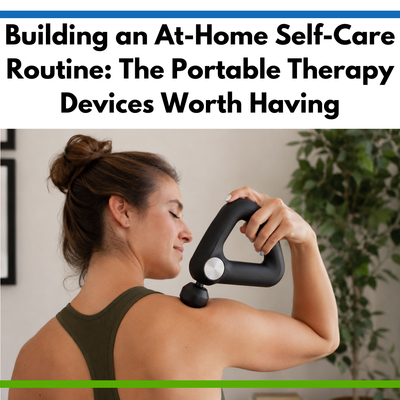
Percussion massage guns deliver rapid, targeted pulses into muscle tissue. They're particularly good for loosening tight shoulders, calves, and lower back muscles, and some research suggests a few minutes of use after exercise can ease delayed-onset muscle soreness (DOMS) by boosting local blood flow. The catch is technique: keep the gun moving rather than parking it on one spot, start on the lowest intensity, and never run it directly over bone, joints, or areas with numbness. People with blood clotting disorders, osteoporosis, nerve damage, and select musculoskeletal conditions such as cervical joint conditions, should skip these or check with a provider first.
Handheld and shiatsu massagers are gentler and better suited to sensitive areas like the neck and shoulders, or for people who find percussion guns too intense. Many combine kneading motion with mild heat, which is a nice one-two punch for tension.
Vibration and compression devices (think calf or foot sleeves that pulse air pressure) are popular with runners and anyone on their feet all day — they're less about deep tissue work and more about flushing out fluid buildup and reducing that heavy, achy feeling in the legs.
TENS and EMS: Electrical Stim Pain Relief You Control
TENS (transcutaneous electrical nerve stimulation) units are small, battery-powered devices that send mild electrical pulses through electrode pads placed on the skin. The pulses interrupt pain signals on their way to the brain and can trigger the release of natural pain-relieving endorphins — which is why TENS has become a go-to for chronic and acute back pain, arthritis discomfort, and even period cramps.
EMS (electrical muscle stimulation) devices look similar but serve a different purpose: instead of targeting pain signals, they cause muscles to actually contract, which can help maintain muscle activity during recovery from injury or support post-workout muscle engagement. Some combination units offer both TENS and EMS modes in one device, which is worth considering if you want flexibility without buying two devices.
A few safety notes worth mentioning: TENS units are generally not recommended for anyone with a pacemaker or implanted electronic device, and pad placement should avoid the front of the neck, the eyes, and open wounds. If you're pregnant, TENS on the abdomen or lower back is typically discouraged without medical guidance, though use on the extremities is usually considered lower risk. When in doubt, ask your doctor where and how to use it safely.
Portable Ultrasound Therapy: Deeper Relief for Stubborn Tissue
Therapeutic ultrasound has long been a staple in physical therapy clinics, and it's now available in genuinely effective portable, home-use models. Rather than working on the skin's surface like a TENS unit, ultrasound uses sound waves to generate gentle heat deeper in the muscle and connective tissue — which can improve blood flow, loosen scar tissue, and ease stiffness in areas that don't respond well to surface-level treatment.
This makes it a strong option for chronic issues like a stiff shoulder joint, deep lower back tension, or nagging tendon and ligament pain that massage alone doesn't quite reach, “itis” conditions, etc. Basically, any condition that requires pain reduction, a decrease in inflammation, an increase in soft tissue extensibility and flexibility, improved range of motion, or facilitating soft tissue repair and wound healing.
Ultrasound is typically used in short sessions (often 5–10 minutes per area) and is one of the more "clinical" tools in an at-home kit. Be sure to read and follow the accompanying instructional materials for the most effective and safe use of ultrasound therapy.
Hot and Cold Therapy: The Original At-Home Treatment
It's easy to overlook heat and cold packs in favor of flashier devices, but they remain some of the most effective tools for managing pain and inflammation — and they pair well with everything else on this list.
Cold therapy narrows blood vessels and numbs nerve endings, making it the better choice for fresh injuries, swelling, or flare-ups — including tension headaches, where a cooling cap or gel wrap across the forehead and temples can bring real relief within minutes
Heat therapy relaxes muscles and increases circulation, which makes it better suited to chronic stiffness, tight shoulders, and general muscle tension before activity or stretching
Contrast therapy (alternating hot and cold) is popular with people recovering from intense exercise, since the switch between vessel constriction and dilation can help flush metabolic waste out of tired muscles
Modern versions have gotten more sophisticated — wraps with adjustable temperature settings, gel packs shaped for the neck and shoulders, and headache-specific caps that combine compression with cooling gel.
|
Cold therapy
Narrows blood vessels & numbs nerve endings
Best for
|
Heat therapy
Relaxes muscles & increases circulation
Best for
|
Contrast (hot + cold)
Alternating vessel constriction & dilation
Best for
|
Stretching and Mobility Tools: Keeping Muscles Loose
Recovery devices matter, but flexibility work is what actually keeps muscles from tightening back up. A few simple, inexpensive tools round out a self-care kit nicely:
- Foam rollers for self-myofascial release across the back, IT band, and calves
- Massage balls (lacrosse or spiky balls) for pinpoint spots like the shoulder blade or glute that a roller can't reach
- Stretching straps to safely deepen hamstring, hip, and shoulder stretches, especially useful for people with limited flexibility or recovering from injury
These tools cost little and take up almost no space, but they're often what makes the difference between a device sitting in a drawer and an actual daily habit.
Matching Devices to Specific Complaints
It helps to think in terms of the problem you're solving rather than the device itself. Here's how the categories above map to common complaints:
Lower back pain: A combination approach tends to work best — heat before activity to loosen things up, a TENS unit for ongoing pain management, and a percussion massage gun or foam roller for the surrounding muscles once the acute pain has settled.
Shoulder joint pain: Shoulders are tricky because pain often comes from a mix of joint stiffness, surrounding muscle tension, of other soft tissue components like the subacromial bursae. Portable ultrasound can address deeper joint stiffness, a handheld massager or gentle percussion gun helps the scapular stabilizer muscles and shoulder rotator cuff muscles, and a heat wrap before stretching improves range of motion.
Tension headaches: Cold therapy caps are often the most effective first response, since they target both the head and the tense neck/shoulder muscles that frequently cause tension headaches in the first place. A TENS unit with headache-specific settings, applied to the neck and shoulders rather than the head, can also help by easing the muscular tension that may be the root cause.
Post-workout muscle recovery: Percussion massage guns and compression devices are the fastest-acting options here, while contrast (hot/cold) therapy and gentle stretching support recovery over the following day or two.
General joint stiffness and everyday aches: This is where a rotating combination — heat in the morning, gentle movement and stretching tools throughout the day, and a massage device or TENS session in the evening — tends to serve people best over the long run.
Putting It All Together
You don't need every device on this list to build a solid self-care routine — start with one or two that address your most persistent complaint and build outward from there. A reasonable starting kit for most people looks something like: a heat/cold wrap, a basic TENS unit, and a percussion massage gun. From there, portable ultrasound and specialty tools (headache caps, stretching straps) are worth adding once you know which type of relief actually works for your body.
The goal isn't to collect gadgets — it's to have the right tool within reach when your back, shoulders, head, or any other soft tissue irritation are telling you they need attention. A little consistency with the right devices goes a long way toward better mobility, less pain, and genuinely feeling better day to day.
| Health issue | ProHealthcare products that fit |
|---|---|
| Large muscle group pain and stiffness |
Relief Pak Heating Unit (EN-111961-2) · Current Solutions Intensity TENS (CS-DI1010) · Massage Gun (EN-141770) · CanDo Foam Roller (EN-302100) · ICE20 Compression Wrap, Back & Hip (ICE-Back-Hip) |
|
Joint pain, inflammation, damaged soft tissue, wound healing, trigger points |
Oceanus Pulsonic Portable Ultrasound (OCEETUS002) · US Pro 2000 (CS-DU3035) · Thera Cane (EN-141150-2) · CanDo Massage Balls (EN-301997-12) · Thera-Band Stretch Strap (EN-101384) |
| Tension headaches | Relief Pak Cold Pack, Neck (EN-111251) · ColPak Oversized (EN-001512) · Current Solutions Intensity TENS (CS-DI1010) Mini Massager (EN-141050) |
| Post-workout recovery | Massage Gun (EN-141770) · Manual Massage Roller (EN-141720) · CanDo Foam Roller (EN-302100) · Thera-Band Stretch Strap (EN-101384) · Relief Pak Heating Unit + Cold Packs (contrast) |
|
General stiffness & aches & trigger points |
Relief Pak Heating Unit (EN-111961-2) · 3-Point Body Massager (EN-14-1702) · Thera Cane (EN-141150-2) · Intensity Select Combo TENS/EMS (CS-DI8195) · CanDo Foam Roller (EN-302100) . Thera-Band Stretch Strap (EN-101384) |
⚠ A note on safety: As always, this guide is for general information and isn't a substitute for medical advice. If you have an underlying health condition, are pregnant, or have persistent or worsening pain, check with your doctor or physical therapist before starting a new device or therapy routine.