



 26th Aug 2026
 Posted by Lynn Perkes, MS, AT, PTA on
So, You Purchased a Portable, In-Home Ultrasound Machine, Now What?
So, You Purchased a Portable, In-Home Ultrasound Machine, Now What?
Portable, in-home ultrasound devices are some of the most commonly purchased and relied upon therapeutic interventions for self-treatment of a variety of musculoskeletal injuries and conditions, or for continued treatment after they, as a patient, complete their insurance paid visits to the clinic and want to continue receiving ultrasound treatment at home. This is looked at favorably by many clinicians as they want their patients to completely heal, and they realize that compliance to their designed protocols for home treatment are often the neglected. Their desire to continue ultrasound treatment is a sign of willing compliance to the clinician’s prescribed treatment regimen.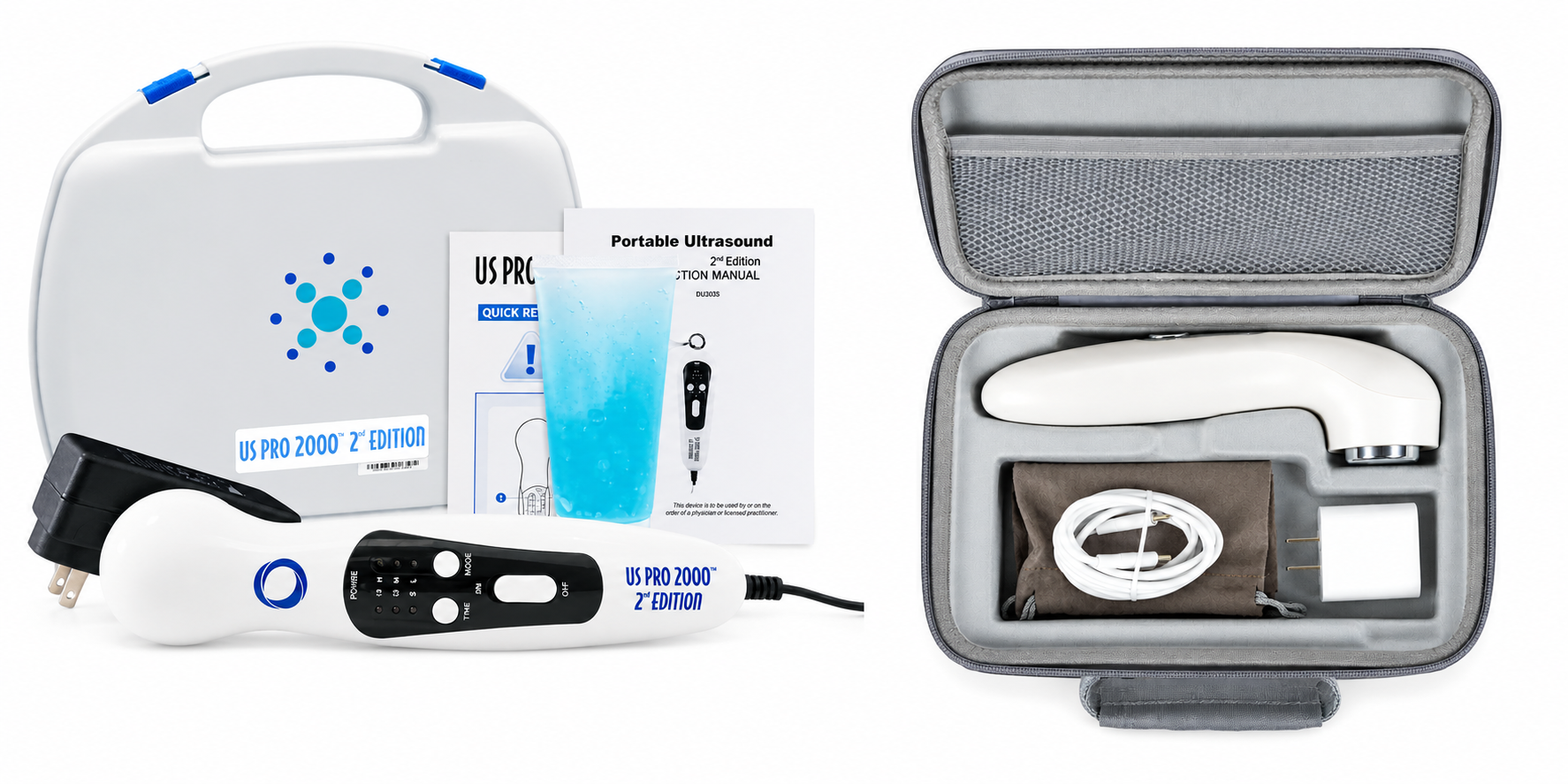
The high-frequency acoustic vibrations produce a thermal effect on the tissues, increasing blood flow, oxygen and nutrient delivery, and cellular metabolism, while reducing pain and enhancing connective tissue extensibility. These high-frequency acoustic vibrations also produce a nonthermal effect of protein and collagen synthesis and cell membrane alteration for accelerated tissue regeneration and wound healing. These two physiological mechanisms make ultrasound therapy a unique and effective treatment intervention for a vast number of musculoskeletal issues that can plague anyone, from the athletic to the aging and everyone in between.
Considering that a large and expanding number of individuals are using home-based ultrasound therapy to treat such a vast array of conditions, I feel it is important to address some common questions and concerns, and offer some important “tips” that can affect you, the end user of home-based therapeutic ultrasound, and enhance the effectiveness of the therapy you apply. I will address some of these “issues” in a question and answer format and provide some commentary when applicable.
Can I apply the ultrasound therapy by myself, or do I need someone else to apply the treatment?
This is a good question and will be affected by the location of the body part to which the therapy is being applied, and the individual’s ability (or flexibility) to access a particular area. For example, if the location where the therapy is being applied is the anterior shoulder area, the patellar tendon, the wrist, the ankle or other easily accessible location, then the individual can apply the therapy themselves without compromise to the technique, provided it is properly followed.
However, consider that the areas to be treated are the lower back area, the cervical spine, the calf and Achilles tendon, the posterior shoulder, or sciatic area in the buttocks area, etc. It would be very difficult, if not impossible, to reach these areas by yourself to properly apply effective ultrasound therapy.
What is the correct technique to properly apply therapeutic ultrasound?
When applying ultrasound therapy, the proper technique consists of the following:
- 1
The treatment area should be limited to an area that is approximately 2 times the size of the ultrasound applicator soundhead. Trying to apply an effective therapeutic dose of ultrasound to a larger area will “dilute” the intensity and effectiveness of the ultrasound treatment.
- 2
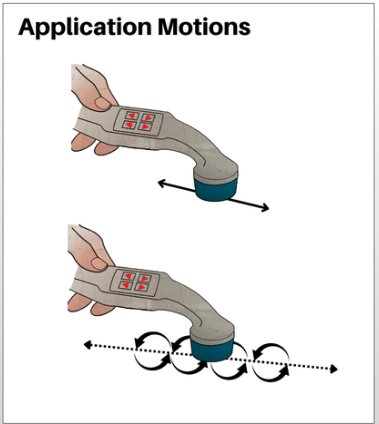
Move the ultrasound head in either back-and-forth linear strokes or small overlapping circular motions at a rate of 3-4 cm/second. Moving the head at a faster rate will also dilute the intensity and effectiveness of the ultrasound treatment.
Application Motions - 3
During treatment, make sure that the applicator soundhead’s surface remains in complete contact with the body surface being treated at all times. Note: the coupling gel serves as a lubricant and fills incongruencies between the soundhead and skin surface. If the head is removed from the surface during treatment or even tilted at a 15 angle, a significant reflection loss of energy will occur, resulting in dramatically reduced therapeutic benefits.
How often can I apply therapeutic ultrasound to my body?
Therapeutic ultrasound can be safely applied 1 – 2 times daily for up to 14 sessions. After this time, it is generally recommended to take 4-5 days off so the tissues aren’t excessively subjected to the thermal stimulus.
Why do portable ultrasounds only come with the acoustic frequency of 1 MHz?
The acoustic frequency determines the depth the ultrasound sound waves penetrate into the tissues before they are absorbed and converted to heat (thermal). A frequency of 1 MHz will penetrate more deeply into the tissues, approximately 3 – 5 cm, whereas a frequency of 3 MHz will penetrate more superficially, approximately only 1-2 cm in depth.
Because the 3 MHz frequency sound waves are absorbed superficially, the risk of overheating the skin, where the pain receptors are located, is present. In the hands of unskilled clinicians, this could lead to overheating of the tissues, and a burning sensation for the individual.
Consequently, portable, in-home ultrasounds can only provide the 1 MHz frequency setting, and therefore are really best used for musculoskeletal issues that are more superficial, at the 1 – 2 cm depth.
Now What?
The foregoing information, in question and answer format, addresses some of the more commonly asked questions regarding self-applied therapeutic ultrasound, and also provides some background information to assist in delivering more effective therapy. But there is more information that could prove helpful in assisting you in understanding the scientific basis for therapeutic ultrasound, in selecting the most appropriate settings (e.g., Mode and Duty Cycle) for your specific condition, in knowing important “contraindications” and “precautions” when administering ultrasound, and in determining the duration of treatment, etc.
To make it easier and less time consuming, I have developed a 33 page PDF document in PowerPoint format that provides the summarized information to help you know the whys and hows of therapeutic ultrasound, aimed at helping you more effectively understand and apply ultrasound therapy to yourself. Further, we at Prohealthcareproducts.com offer high quality portable, at-home ultrasound machines to deliver the ultrasound therapy you are seeking.
Success to you in your efforts to effectively treat your nagging musculoskeletal issues and injuries using a portable, in-home ultrasound machine.
Shop Portable Ultrasound Machines
Browse our full lineup of professional-grade portable ultrasound therapy units — ideal for home use, clinic use, and continuing care.