



 3rd Aug 2026
 Posted by Lynn Perkes, MS, AT, PTA on
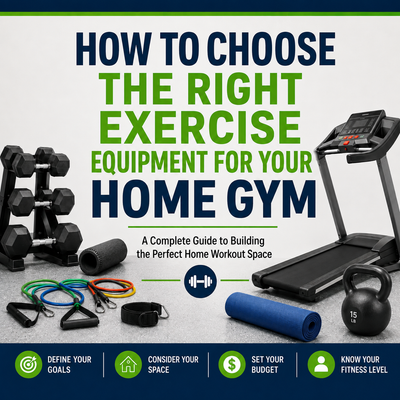
How to Choose the Right Exercise Equipment for Your Home Gym
HOME FITNESS GUIDE
How to Choose the Right Exercise Equipment for Your Home Gym
Build a practical setup around your goals, space, budget, and the workouts you will actually do.
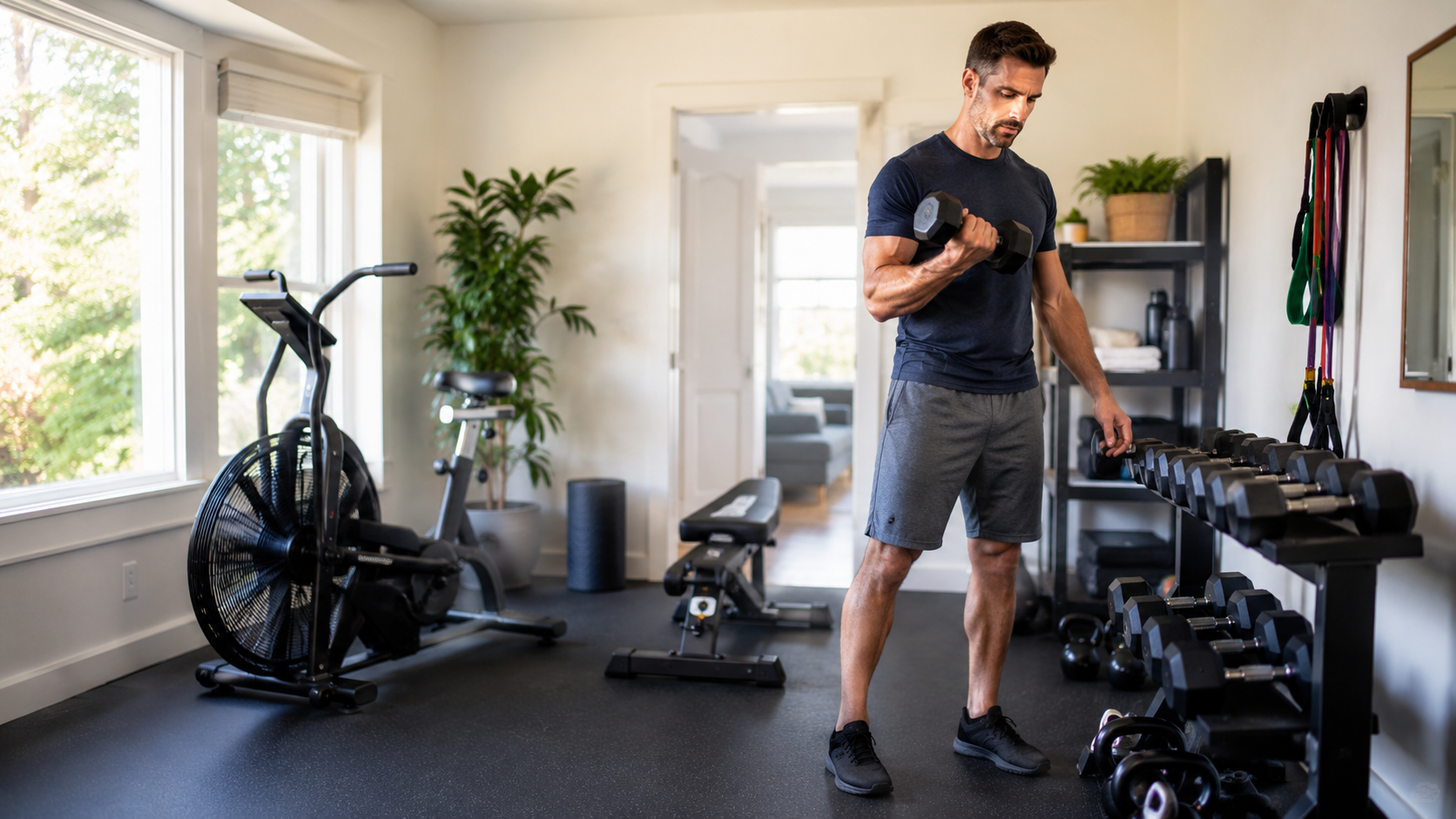
Setting up a home gym is exciting — until you're staring at a wall of dumbbells, bikes, and bands wondering what you actually need. As someone with a degree in exercise science and a semi-gym of my own downstairs, I can tell you the equipment isn't the hard part. Knowing what to buy, and why, is.
Here's how to choose gear that you'll actually use.
| 1 | START WITH A PROGRAM, NOT A SHOPPING CART Before you buy anything, decide what you're training for: general strength, weight loss, cardio endurance, mobility, or some mix. Your equipment should support your program, not the other way around. |
Start With a Program, Not a Shopping Cart
The single biggest mistake I see beginners make isn't picking the wrong equipment — it's not having a program at all. Or worse, building one that doesn't match their actual fitness level, so it's nearly impossible to stick with.
Before you buy anything, decide what you're training for: general strength, weight loss, cardio endurance, mobility, or some mix. Your equipment should support your program, not the other way around. Buy the treadmill first and figure out your goals later, and you'll likely end up with an expensive coat rack.
A SIMPLE BUYING FILTER
| 01GoalWhat result am I training for? | 02RealityWhat can I do consistently now? | 03FitDoes it suit my space and budget? |
The Big Four: What a Home Gym Actually Needs
You don't need a warehouse of machines. Most home gyms do fine with four categories of equipment, each solving a different problem.
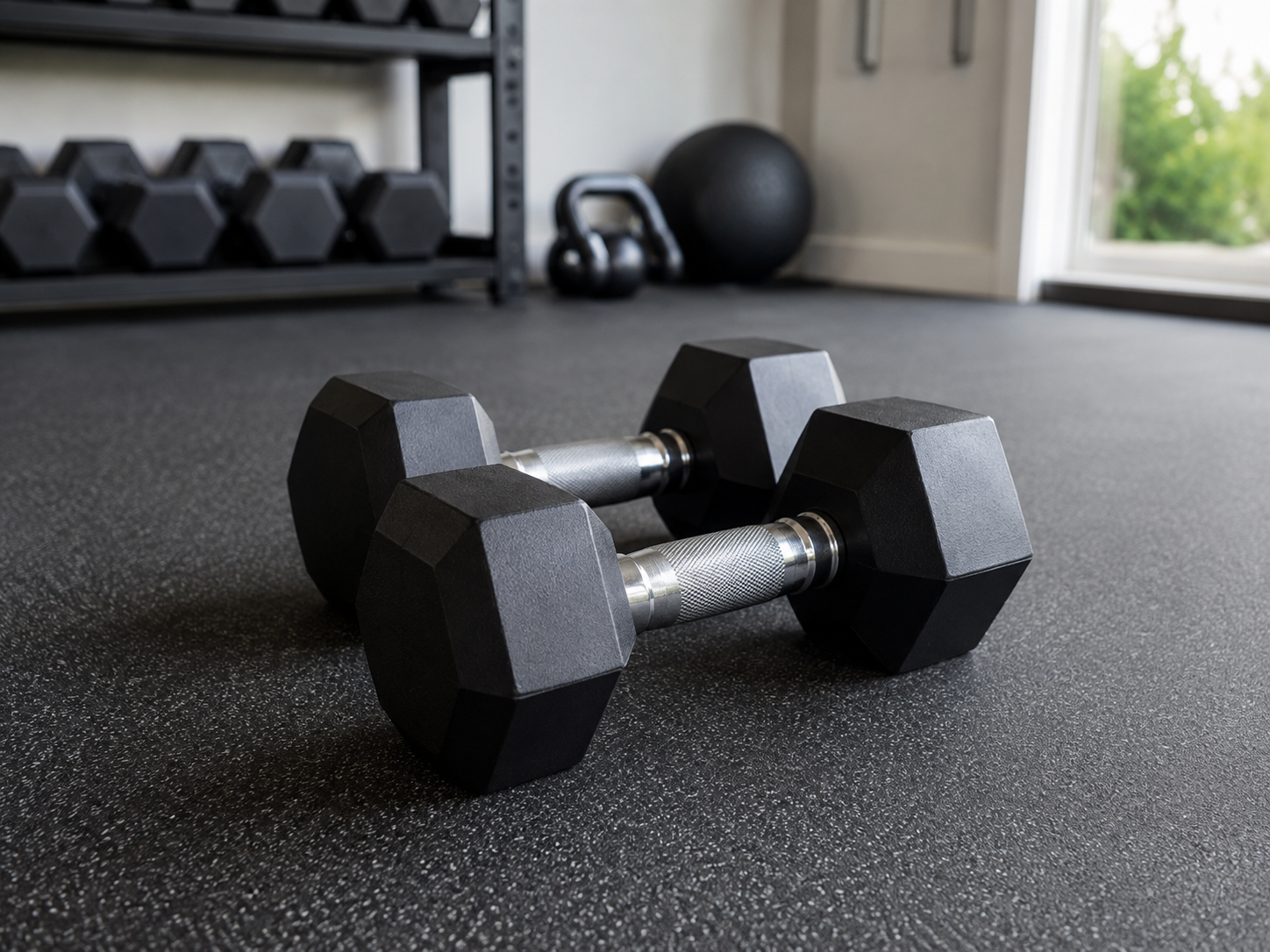 DumbbellsBEST ALL-AROUND PURCHASE
Dumbbells are the most versatile purchase you can make. A single set can train nearly every major muscle group — legs, back, chest, shoulders, arms — with exercises that scale as you get stronger. If you're only buying one thing, buy these. |
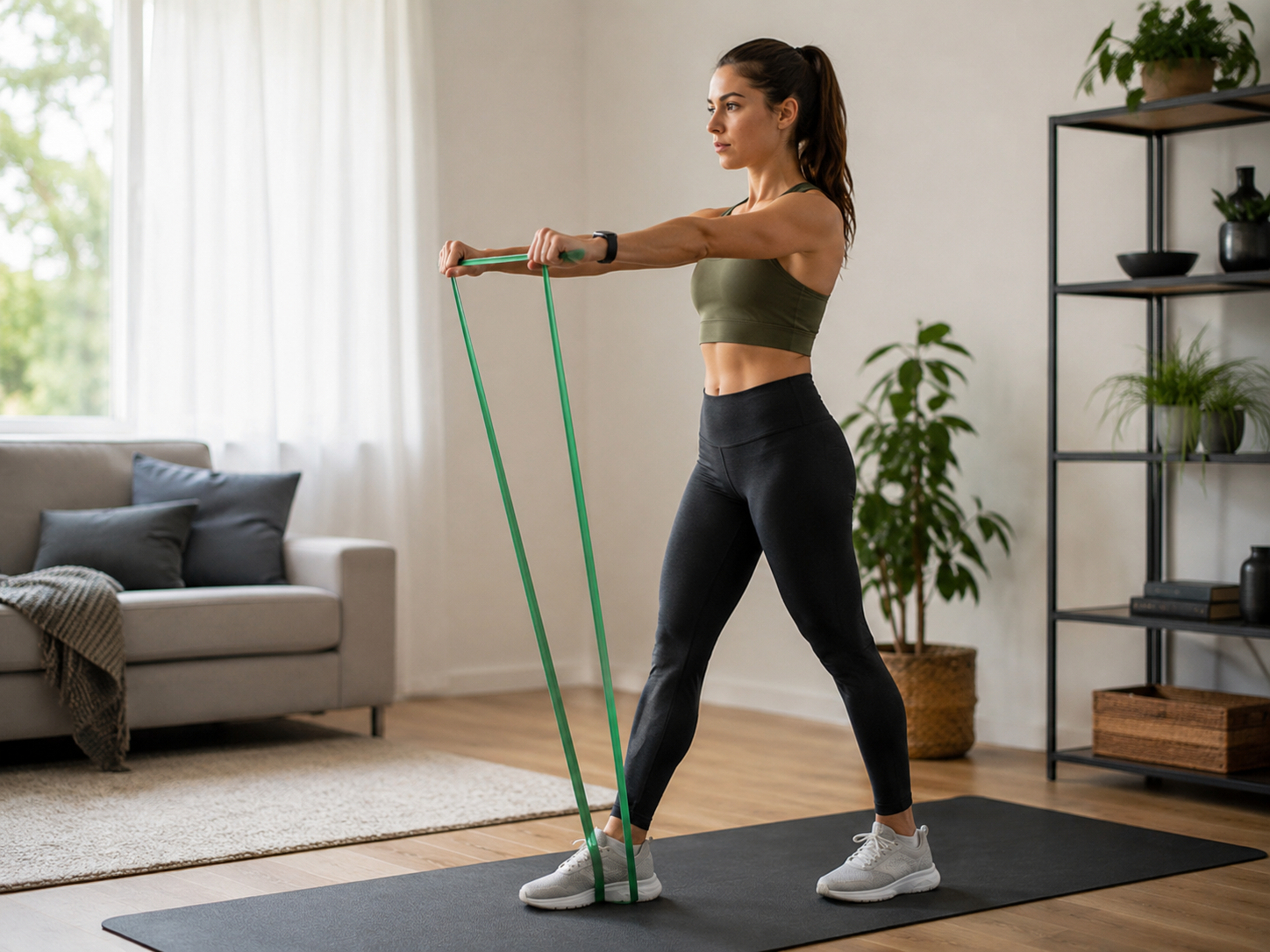 Resistance BandsJOINT-FRIENDLY VERSATILITY
Resistance bands provide a resistance tool that enables the performance of some unique exercises for commonly injured muscles or joints, like the rotator cuff muscles of the shoulder and typically offer a reduced risk of injury (or reinjury) if an exercise is performed less than optimally. |
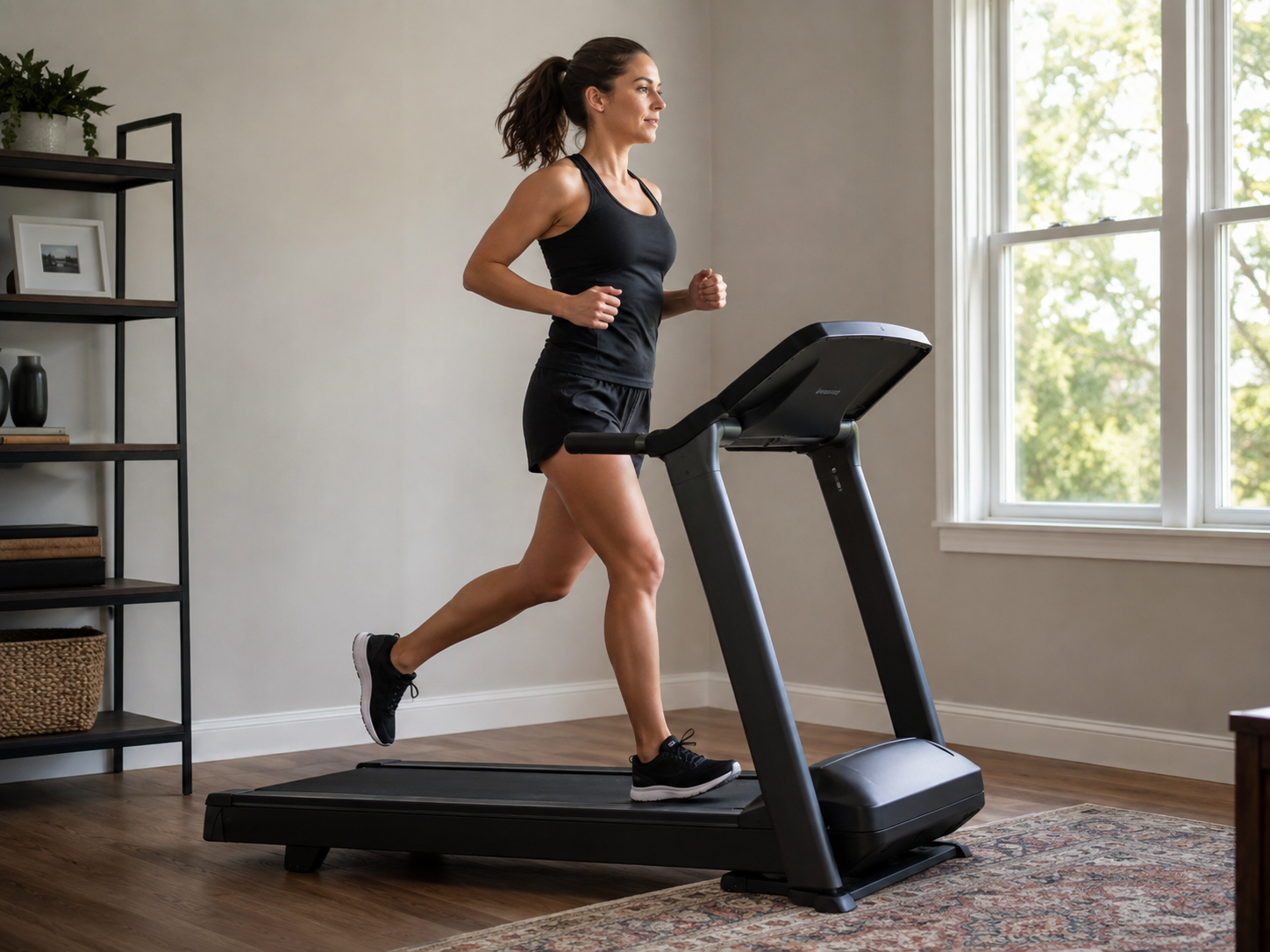 Cardio EquipmentHEART HEALTH AND ENDURANCE
Cardio equipment — a treadmill or recumbent bike — more inadeptly covers the heart-health side of fitness that strength training has limitations. Treadmills are great for walking or running indoors year-round; recumbent bikes are gentler on the joints and a smart choice if you're newer to exercise or managing joint pain. |
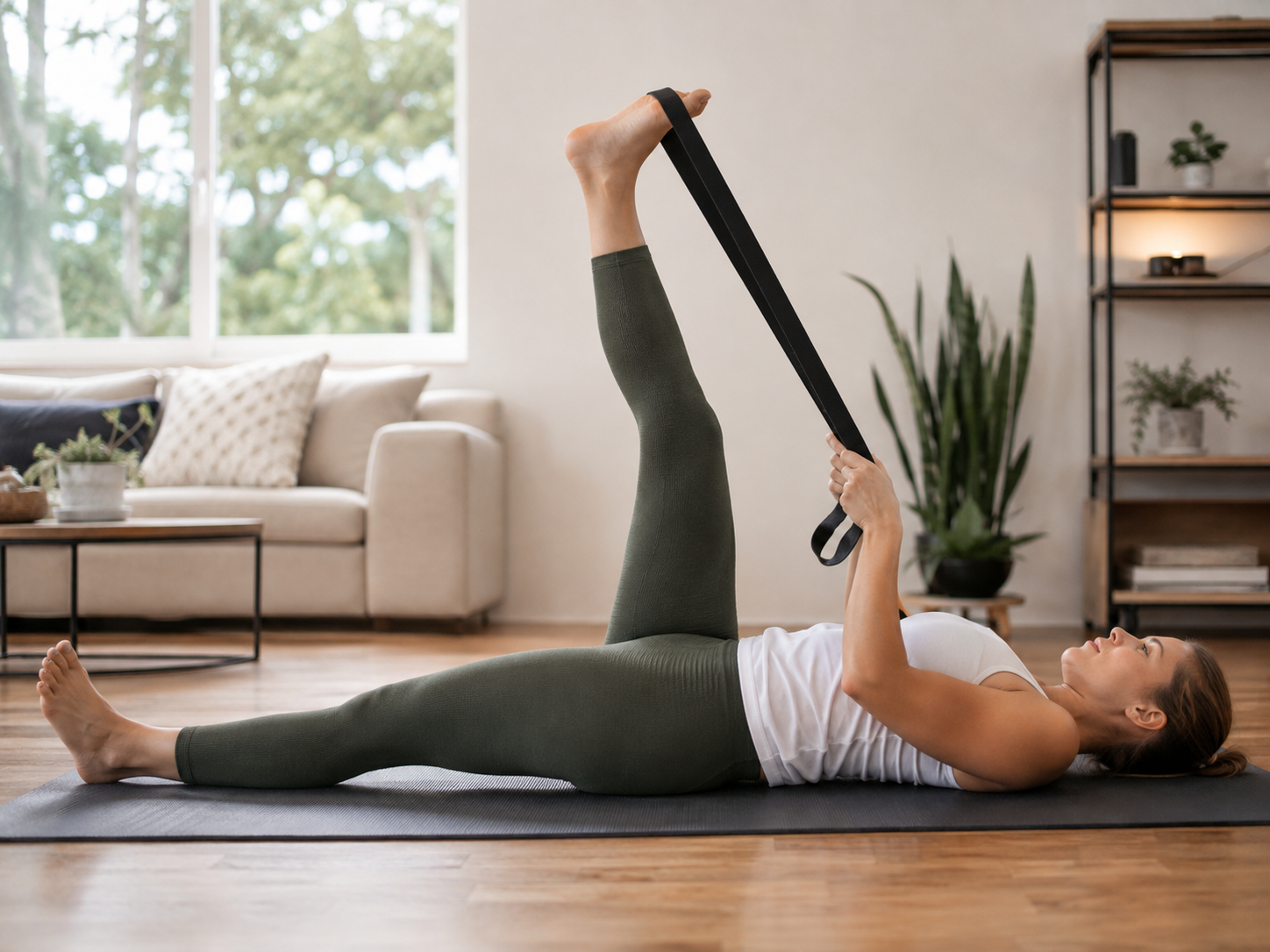 Stretching GearMOBILITY AND RECOVERY
Stretch bands round things out by addressing flexibility and mobility, which tend to get ignored until something feels tight or you get hurt. Bands are inexpensive, portable, and effective for loosening up the muscle groups — hips, hamstrings, shoulders — that get stiff from sitting or from strength training itself. |
AT-A-GLANCE COMPARISON
| Equipment | Best for | Space needed | Typical cost |
|---|---|---|---|
| Dumbbells | Strength | Low | Low-medium |
| Resistance bands | Strength / rehab | Very low | Low |
| Treadmill | Cardio | High | High |
| Recumbent bike | Low-impact cardio | Medium | Medium-high |
| Stretch strap / band | Mobility | Very low | Low |
Don't Skip the Stretching Gear (Learn From My Mistake)
If your budget is tight, it's tempting to treat stretching gear as optional. Don't. It's one of the cheapest additions you can make and one of the ones I'd prioritize sooner if I were starting over.
The Real Obstacle Isn't the Equipment — It's Consistency
Here's something I hear constantly from customers: they like the equipment they bought. They just don't use it consistently. That's not an equipment problem — it's a planning problem. The gear sitting in the corner isn't broken; it's disconnected from a program the person can realistically stick to.
| 3xPER WEEK | This is why step one (build a program first) matters so much. Equipment you use three times a week is a good investment.
Equipment you look at guiltily from the couch is not, no matter how good a deal you got on it. |
Quick Tips for Choosing Equipment That Fits You
A few practical guidelines, beginner to beginner:
| ✓ | Match your current capabilityMatch equipment to your current capability, not your goal capability. Buying advanced gear for a body that isn't ready for it is a fast track to injury or discouragement. |
| ✓ | Measure your spaceMeasure your space before you buy. A treadmill looks a lot bigger in your living room than it did online. |
| ✓ | Prioritize versatilityPrioritize versatility early. Dumbbells and bands do more per dollar than single-purpose machines. |
| ✓ | Budget for recoveryBudget for recovery, not just performance. Stretching and flexibility equipment is often the first thing cut and the thing people wish they hadn't skipped. |
| ✓ | Buy for your real routineBuy for the program you'll actually follow. Ambitious equipment paired with an unrealistic plan usually ends the same way: unused gear and a discouraged mindset. |
Building a Home Gym That Works for You
A good home gym isn't the one with the most equipment — it's the one that matches your goals, your space, and a program you can realistically stick with. Start with a plan, cover strength, cardio, and flexibility, and don't shortchange recovery.